


Charlie Weimers has emerged as one of the European Union’s most influential—and controversial—conservative voices. Since his election to the European Parliament in 2019, the Swedish MEP has consistently challenged the political consensus on migration, national sovereignty, and the future of Western civilization, arguing that the West must learn from Sweden’s mistakes.
For years, Sweden was celebrated as a model of openness and prosperity. Today, it has become a cautionary tale in Europe’s debate over migration, grappling with rising gang violence, organized crime, and growing concerns about social cohesion. Weimers has been among the Parliament’s most persistent critics of the policies he argues produced those outcomes, making him a leading advocate for stronger borders, national sovereignty, and a renewed confidence in Europe’s cultural inheritance.
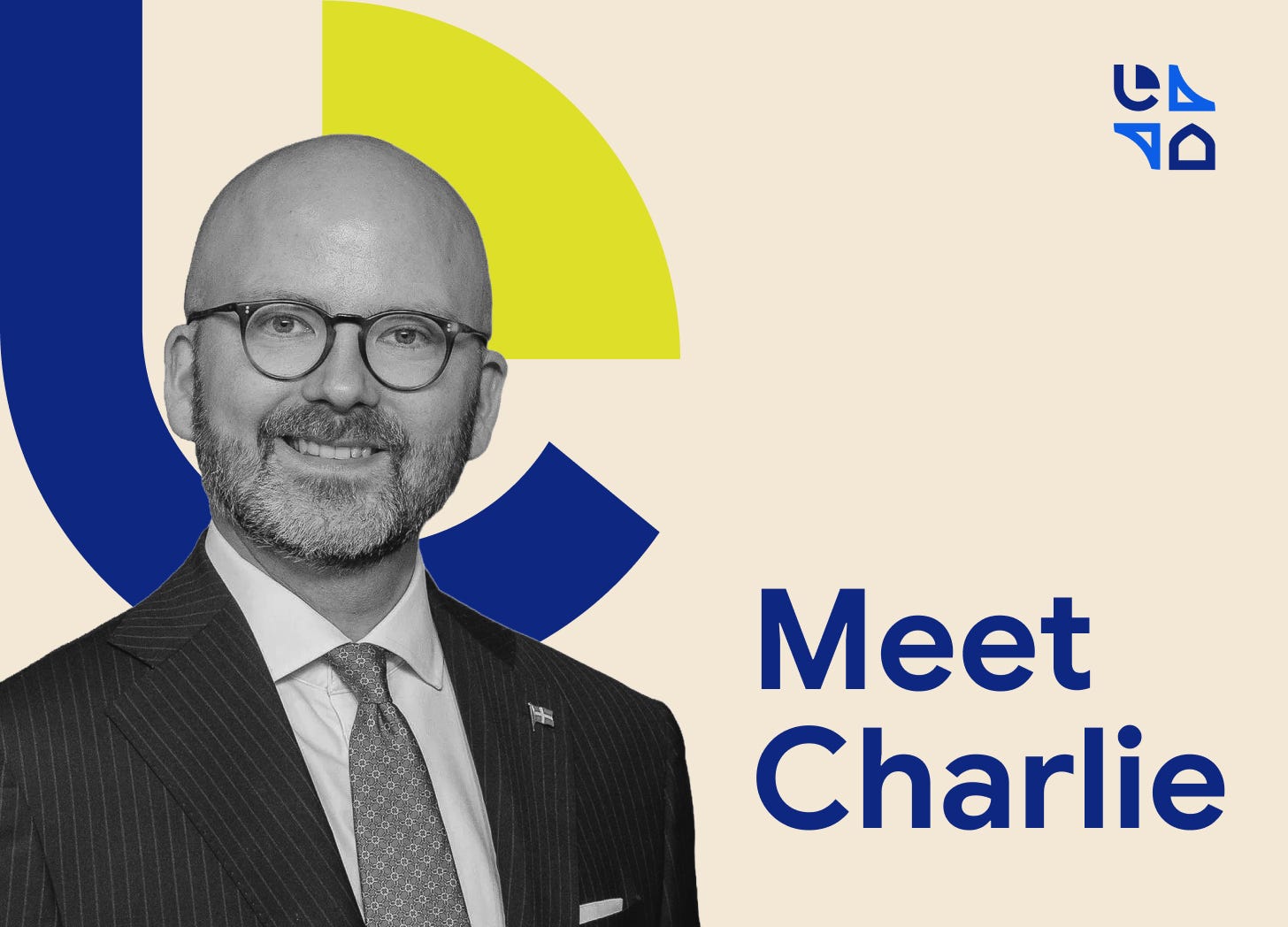
His willingness to confront authoritarianism has extended well beyond Europe’s borders. An outspoken supporter of Israel and one of the European Parliament’s fiercest critics of the Iranian regime, Weimers was personally sanctioned by Tehran in 2022, a distinction he called “a badge of honor.”
After beginning in Sweden’s youth political movement, Weimers served in municipal government before earning a degree in political science from Karlstad University. He also studied in the United States, gaining a firsthand appreciation for American political institutions and the transatlantic alliance. Before entering the European Parliament, he served as political adviser and later chief of staff to Swedish MEP Lars Adaktusson.
In 2018, convinced that Sweden’s political establishment had failed to confront the country’s mounting challenges, Weimers left the Christian Democrats to join the Sweden Democrats. His first campaign for the European Parliament captured his political philosophy in four words: “More Sweden. Less Brussels.”
Inside Parliament, Weimers has combined legislative work with an aggressive campaign to expose Islamist influence within European institutions. He commissioned Network of Networks: The Muslim Brotherhood in Europe, a landmark investigation mapping the Brotherhood’s extensive network across the continent and examining European Union funding streams connected to Islamist organizations. That work was followed by Unmasking the Muslim Brotherhood: Brotherism, Islamophobia, and the EU, a second major report examining the movement’s influence on European policymaking and public discourse, released in 2025.
Weimers has served on the European Parliament’s Committee on Foreign Affairs, worked extensively on religious freedom and transatlantic relations, and represented Parliament in its delegation for relations with the United States. Today, as Vice Chairman of the European Conservatives and Reformists Group, he is at the center of many of the defining debates over Europe’s security, identity, sovereignty, and future.